How Does Sound Therapy Help Manage Tinnitus Symptoms?
Tinnitus makes daily activities hard because the individual hears sounds like ringing, buzzing, humming, or hissing without an external cause for those sounds to be heard. The sounds could either be faint and infrequent or distracting for the patient, depending on the person. There is something call
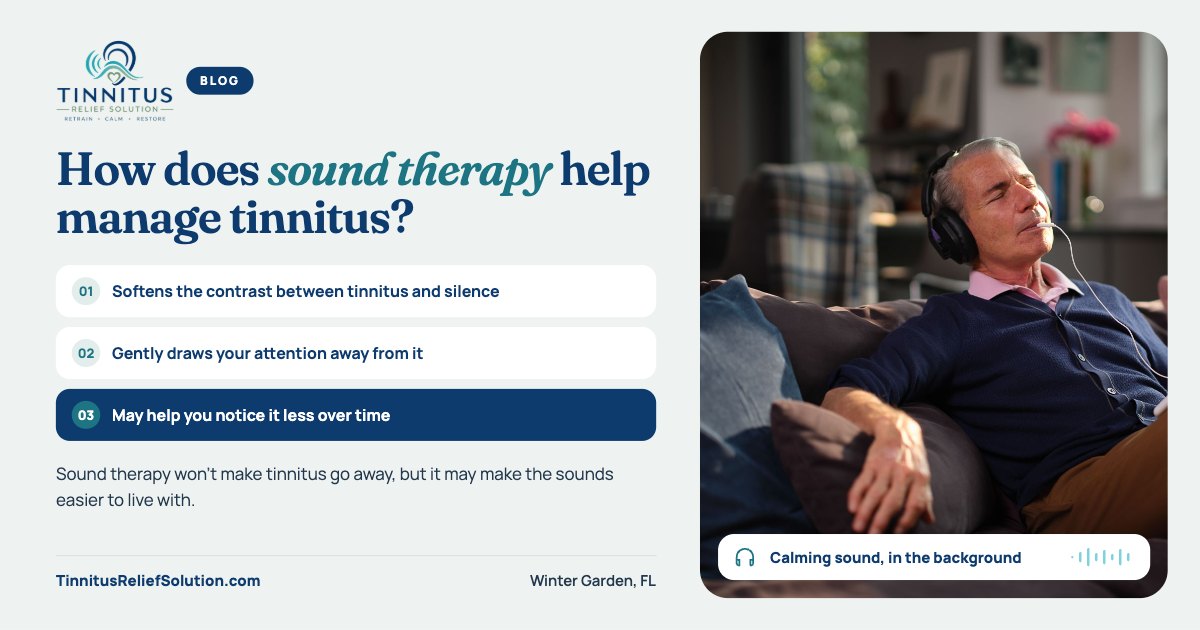
Tinnitus makes daily activities hard because the individual hears sounds like ringing, buzzing, humming, or hissing without an external cause for those sounds to be heard. The sounds could either be faint and infrequent or distracting for the patient, depending on the person. There is something called Sound Therapy for Tinnitus that helps individuals deal with these sounds.
The Tinnitus Relief Solution aims to offer information and guidance to those seeking effective methods of managing their tinnitus problems. Sound therapy will not make tinnitus go away. Rather, it is a way that may help you become less aware of the inner sounds by distracting your attention from them. The knowledge about how sound therapy works will help you choose the right treatment.
What Is Sound Therapy For Tinnitus?
Sound Therapy utilizes external sounds to minimize the prominence of tinnitus or make it more bearable. In essence, the principle here is to add an appropriate sound into the listening environment, such that the difference between silence and the tinnitus sound becomes less pronounced. Different sounds may be chosen depending on personal preference. Based on personal requirements, they may consist of:
- Background soft noise
- Nature noise
- White noise
- Relaxed music
- Environmental noise
- Tinnitus noise
- Noise produced by special hearing or sound machines
It is not always necessary to mask the tinnitus entirely. In some situations, all that is needed is for the tinnitus to become less noticeable to the patient.
How Does Sound Therapy Work?
Tinnitus is experienced by the brain despite the fact that the sound is coming from nowhere. When there is a lot of silence in the surroundings, this contrast of sound and silence makes the person experience tinnitus more clearly. The introduction of some other sound may make a difference to this situation.
For instance, a person will become aware of the presence of the tinnitus condition during times when one is lying down in a perfectly quiet bedroom. Some soft music can be used as a means of covering the tinnitus.
This can prove very useful when engaging in activities that might increase one’s awareness of the tinnitus, for example, reading, work, or going to bed.
How Can Sound Therapy Help Manage Tinnitus Symptoms?
The possible importance of sound therapy lies in the individual’s perception and reaction to the presence of tinnitus. It may become part of the general management of tinnitus rather than considered a definitive solution.
Potential role and how it may help
Masking - A background sound can partially cover or blend with tinnitus. Reducing contrast - External sound can reduce the difference between silence and tinnitus. Shifting attention - A person may focus less on the tinnitus when another comfortable sound is present. Creating a calmer environment - Gentle sounds may make quiet settings feel more comfortable. Supporting daily activities - Background sound may make tinnitus less distracting during work or relaxation.
However, it depends on the person concerned. What sounds good to one person can be annoying or unhelpful to someone else. Getting the correct sound level and form of sound is crucial in employing this strategy.
What Types of Sounds Are Used in Tinnitus Management?
There is no single sound that works for everyone. The choice often depends on the person's tinnitus experience, environment, listening preferences, and goals.
White Noise
White noise contains a broad range of frequencies and can provide consistent background sound. Some people use it in quiet environments where tinnitus becomes more noticeable.
Nature Sounds
Sounds such as rainfall, flowing water, wind, or other natural environmental sounds can provide a softer listening experience. They may be preferred by people who find continuous artificial noise unpleasant.
Music
The sounds of music can be a good distraction to entertain the individual. Music is preferred by many because they like soft music with which they are familiar.
Customised Sound
There are some strategies for tinnitus control which employ sound based on a person's specific auditory profile or tinnitus profile. The involvement of an expert can prove helpful in this respect. The best choice is normally the one which is comfortable, not causing any more pain, and easily integrated into the individual's lifestyle.
Is Sound Therapy Suitable for Everyone With Tinnitus?
Sound therapy can be included in the methods for treating tinnitus; however, there are different causes and types of tinnitus, which means that something that might work for one patient may not be effective for another. It is also important to conduct a professional evaluation, particularly if the tinnitus is new, recurrent, affects daily activities, or coexists with some other ear conditions. It is also necessary to avoid using too much sound because the goal is to create an environment that is pleasant for listening, and not to replace one noise with another. Individuals who have problems with their hearing ability suddenly or have ear symptoms and dizziness need to have themselves evaluated medically rather than resorting to sound therapy alone.
Sound Therapy For Tinnitus and Everyday Listening
One benefit of sound therapy is the fact that sounds can be introduced into normal activities. In most cases, it does not involve listening to the sound on a continual basis during the day, but listening to the sound when tinnitus becomes very noticeable. For example, a person might use gentle background sound:
- Work time: Low ambient sound could help diminish the effect of tinnitus during work.
- Relaxation time: Gentle music or ambient nature sounds could make relaxing periods more enjoyable.
- Bedtime: Ambient sound could be used when tinnitus starts to show up at nighttime in a quiet bedroom.
- Reading time: Consistent sound could give an extra point for focusing the attention of ears.
The most crucial element is comfort. Sound should be kept within a manageable limit.
What Should You Consider Before Trying Sound Therapy?
It is important to think about your experience with tinnitus before deciding to try a sound therapy option for treatment. Ask yourself:
- When is tinnitus most noticeable to me?
- Is tinnitus made more noticeable by quietness?
- Are there sounds that make concentration more or less difficult for me?
- Which type of sounds would I prefer – nature, music, or white noise?
- Is there hearing impairment that needs evaluation?
Keeping account of these patterns will go a long way in helping one understand when sound therapy can be beneficial. It should also be remembered that treatment for tinnitus does not always mean searching for an immediate cure. Various treatment methods can be combined if necessary.
Can Sound Therapy Reduce Awareness of Tinnitus?
The sound therapy approach can be useful in distracting the patient’s mind from the constant ringing by creating a different auditory environment that will allow the person to focus on something else besides the tinnitus sounds. However, reactions differ from person to person. For some, background noise may prove useful, whereas for others, other methods of tinnitus treatment might work better.
Thus, the target should be practical: making the tinnitus less disruptive and increasing the capability of performing daily activities, instead of having unrealistic expectations that an outside noise will solve the problem of the tinnitus.
How to Use Sound Therapy More Effectively
There are some simple considerations that could help you integrate sound therapy into your everyday life.
- Do not increase the volume too much: It should not be very loud or uncomfortable to listen to.
- Select one sound that is tolerable to you: In case the selected sound irritates you, go for another choice.
- Strategically use it: Consider using sound for those instances where your tinnitus tends to be more noticeable and not necessarily something you have to always play.
- Watch how you react: Do you feel that the sound assists you in focusing, relaxing, or getting your mind off tinnitus?
- Professional advice: In case of recurrent tinnitus or its disturbance of your everyday activities, it is advised to consult a relevant professional on how to manage the condition effectively.
Conclusion
Sound therapy can be viewed as a method of managing a condition rather than as a panacea. This approach helps to adjust the auditory environment in order to make the tinnitus more bearable. While for some people, a judicious selection of background noise can be helpful during periods of quietness, for other people, the solution may be in a more holistic strategy involving considerations related to the ears, lifestyle, emotions, and professional assessment.
First, it is necessary for you to understand the pattern of your tinnitus. Then, you will be able to consider ways that would fit into your daily life. If tinnitus is impacting your ability to concentrate, relax, sleep, or in general affecting your quality of life, educating yourself on proper management can allow you to tackle the issue in an organized manner. Tinnitus Relief Solution is a helpful resource when considering issues related to tinnitus.
General information, not medical advice. Tinnitus has many causes, so the right next step depends on an assessment of your own hearing.