Who May Benefit From Bimodal Neuromodulation for Tinnitus?
Being always bothered by the sounds of tinnitus can affect one’s concentration, sleep, communication, as well as the overall quality of life. However, another treatment option may interest those seeking alternatives to standard sound therapies: Bimodal Neuromodulation for Tinnitus.
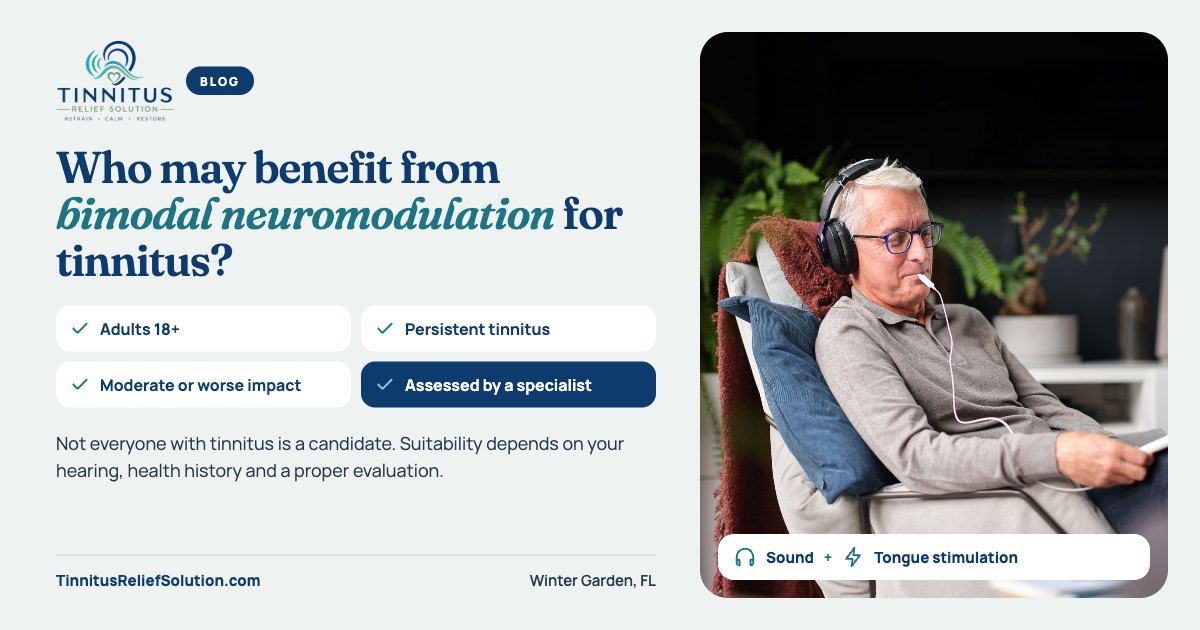
Being always bothered by the sounds of tinnitus can affect one’s concentration, sleep, communication, as well as the overall quality of life. However, another treatment option may interest those seeking alternatives to standard sound therapies: Bimodal Neuromodulation for Tinnitus.
To determine whether a particular therapy qualifies for treatment, Tinnitus Relief Solution first assesses the nature of the tinnitus and the individual's hearing and health profile. The reason is that not all individuals can take bimodal neuromodulation therapy.
What Is Bimodal Neuromodulation for Tinnitus?
In bimodal neuromodulation, two types of stimulation are applied at once, including auditory stimulation via sounds and electrical stimulation using the sensory nerves in the tongue. The commercial device available on the market is the Lenire device, which has received FDA clearance via the De Novo regulatory process in the United States for adults who are 18 years old and above suffering from tinnitus based on the Tinnitus Handicap Inventory (THI).
The procedure works by using auditory and non-auditory sensory stimulation rather than just sound. Scientific research has looked into this procedure using adult patients suffering from tinnitus. In the TENT-A3 study, patients who had at least moderate tinnitus displayed better results when undergoing bimodal stimulation compared to auditory stimulation.
On the other hand, treatment outcomes might differ from one individual to another. In this regard, bimodal neuromodulation should be viewed as just one aspect of personalized tinnitus therapy.
Who May Be a Candidate for Bimodal Neuromodulation?
There are some factors that could make an individual a good candidate for such therapy.
Adults With Persistent Subjective Tinnitus
The scientific study on bimodal neuromodulation has mainly been performed using adults with chronic subjective tinnitus. In most studies, the participants usually suffered from tinnitus for several months and not for a short period.
Subjective tinnitus refers to tinnitus that is felt by the individual and not triggered by any sound source. For patients with recent onset of tinnitus, doctors normally look at its cause before thinking about bimodal neuromodulation.
People Whose Tinnitus Is Moderately or More Severely Bothering Them
The severity of the condition is also relevant; for example, the use of THI score > 38 in clinical studies with Lenire as a criterion for moderate or worse tinnitus severity. The benefit from the bimodal stimulation was found to be clinically significant in patients suffering from moderate or worse tinnitus in the TENT-A3 study.
This is not to say that all individuals with a low THI score cannot be offered treatment for tinnitus. Instead, it means that the approach is effective in the specific population.
People Who Continue to Experience Significant Tinnitus Impact
Neuromodulation is of special interest to some people if their tinnitus persists even after adopting other forms of treatment for managing it.
This includes challenges in:
- Concentration
- Relaxation
- Sleep
- Communication
- Work/study
- Enjoyment of daily activities
Tinnitus impact on a patient’s daily routine can be evaluated using the following validated tests: THI, Tinnitus Functional Index.
How Hearing Status Can Affect Suitability
Hearing evaluation is a significant component of a tinnitus evaluation since hearing loss is likely to coincide with tinnitus, and it allows clinicians to know more about the individual’s hearing profile.
Bimodal neuromodulation has been clinically trialed using specified hearing-related eligibility criteria. Patients involved in the TENT-A3 trial had specified criteria for hearing loss at various frequencies. Therefore, the presence of tinnitus alone does not automatically qualify a patient for participation in the trial program. The determination of suitability for the procedure requires audiological assessment.
People Looking for a Non-Surgical Treatment Approach
The other benefit of the procedure for qualified patients is its non-invasive nature. The procedure involves the use of sound to the ears and external stimulation of the tongue through electricity. This is different from implant-based neuromodulation techniques since it does not involve any surgery. This can be a significant aspect for someone searching for a non-surgical method of tinnitus treatment when consulting an expert.
Who May Not Be Suitable?
However, not all individuals suffering from tinnitus are the right candidates for a specific device. Suitability is based on the type of device, its indications, and the medical history of the patient. For instance, the clinical information published about the Lenire device includes various restrictions and contraindications related to such medical conditions as objective tinnitus, active implantable device, pregnancy, tongue impairment, epilepsy, loss of consciousness, mouth ulceration, head and neck neuralgias, and Ménière’s disease.
The specific criteria will have to be confirmed with the clinician treating the patient and according to the instructions for use of the current equipment. Those patients with tinnitus due to an underlying medical condition will also need diagnosis and treatment of that condition.
What Does Treatment Typically Involve?
The specific process varies from device to device and from study protocol to study protocol. For Lenire device studies, the device was fitted to the participants, who then had to wear it for about an hour per day for 12 weeks of therapy. Sound and tongue stimulation intensity can be tailored to individuals at fitting.
Treatment cannot be viewed as merely acquiring a device to treat the condition without any clinical advice. The FDA indication for Lenire clearly states that treatment should occur after a prescription from an appropriately skilled clinician.
What Can Patients Realistically Expect?
Another crucial aspect is the elimination of tinnitus through bimodal neuromodulation. At present, there is no scientific basis for presenting bimodal neuromodulation as a complete cure. Rather, the efforts have been centered around minimizing the symptoms associated with tinnitus.
In a significant study published in 2024, it was observed that 58.6% of patients having moderate to severe tinnitus responded as per the criteria established by the researchers during the bimodal stimulation period, compared to only 43.2% of the subjects during the sound-only period. In a systematic review and meta-analysis in 2026, clinically significant improvements in tinnitus measures were seen in studies involving bimodal stimulation therapy.
This is all good news; however, the response can vary from one patient to another. It is important for treatment plans to be based on clinical evaluation rather than only the anticipated outcomes.
Why Professional Assessment Matters Before Treatment
There are many potential contributors to tinnitus. Auditory problems, ear conditions, medication effects, jaw or neck problems, and other health concerns must be evaluated. Before neuromodulation treatment, a healthcare professional may consider:
- Tinnitus duration and characteristics
- Tinnitus severity and daily impact
- Hearing ability
- Ear health
- Medical history
- Current medications and devices
- Potential contraindications
- Previous tinnitus treatments
- Individual treatment goals
This evaluation assists in determining if bimodal neuromodulation is suitable, or if some other treatment must first be tried.
Is Bimodal Neuromodulation Right for You?
There is not one specific type of individual who will definitely be a good candidate for this therapy. It does seem, however, that those adults with persistent subjective tinnitus that causes some irritation might qualify for consideration for this treatment, as long as they fulfill the requirements.
A more appropriate next step would be a proper tinnitus evaluation and not a selection of a treatment based on tinnitus alone. If you are thinking about undergoing Bimodal Neuromodulation for Tinnitus, talk to a certified tinnitus specialist about your condition, hearing ability, medical background, and treatment expectations. We can help patients determine what can affect their treatment eligibility and make a decision accordingly.
Medical note: This article is for educational purposes and does not replace an examination, diagnosis, or personalized medical advice from a qualified healthcare professional.
Conclusion
Treatment for tinnitus demands personalized treatment because people have different symptoms, different hearing capabilities, different medical histories, and treatment requirements. Bimodal neuromodulation is a possible treatment for some adult patients suffering from tinnitus that has not gone away, but this treatment depends on individual assessment. If you know what your condition is all about, then you can be able to make a well-informed decision regarding treatment. Tinnitus Relief Solution will be able to help you understand your options and how to go about the next step.
General information, not medical advice. Tinnitus has many causes, so the right next step depends on an assessment of your own hearing.